What is the current situation in the House and Senate?
Republicans have majorities in both the Senate and the House. The Senate has 53 Republicans and 45 Democrats, plus two independent Senators (Bernie Sanders of Vermont and Angus King) who align with Democrats. In the House, Republicans have 220 seats and Democrats 213, with two vacancies. There are 35 seats up for election in the Senate, along with all 435 seats in the House.
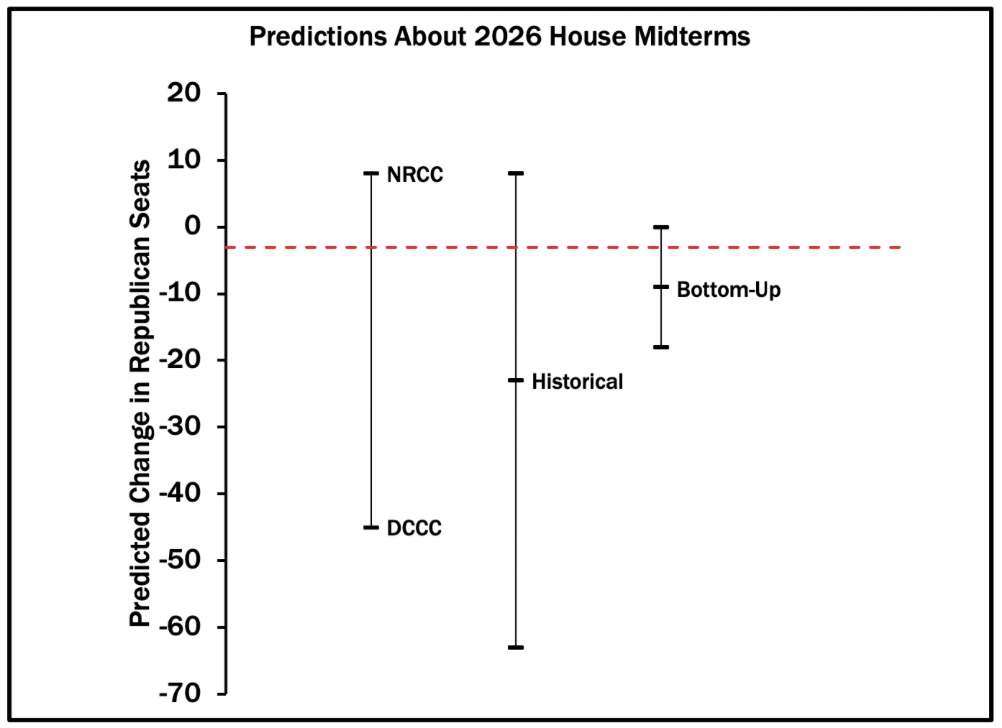
Predictions about the election fall between two extremes. The Republican National Congressional Committee (the party’s campaign organization) expects gains of between five and ten House seats. On the other hand, the Democratic Congressional Campaign Committee expects Republicans to lose more than forty seats.
Why do midterm elections matter?
In each House of Congress, majority control allows a party to determine which proposals are brought up for a vote and which amendments can be considered. The majority party also controls many activities on congressional committees, including investigating federal agencies and preparing spending proposals.
Changes in party control can affect a President’s ability to enact their legislative priorities. For example, if Democrats gain House or Senate majorities, President Trump will likely be unable to enact new immigration policies, reduce the number of federal regulations, or increase military spending. A Democratic House and Senate could withhold funding for U.S. military operations in Iran, or even attempt to remove the President through the impeachment process.
What usually happens in midterm elections?
In most midterm elections, the President’s party loses House and Senate seats. The figure below details House election outcomes in midterms since 1946. The average midterm loss is 23 House seats, and the President’s party has gained seats in only two elections, 1998 and 2002. (Senate results are similar.)
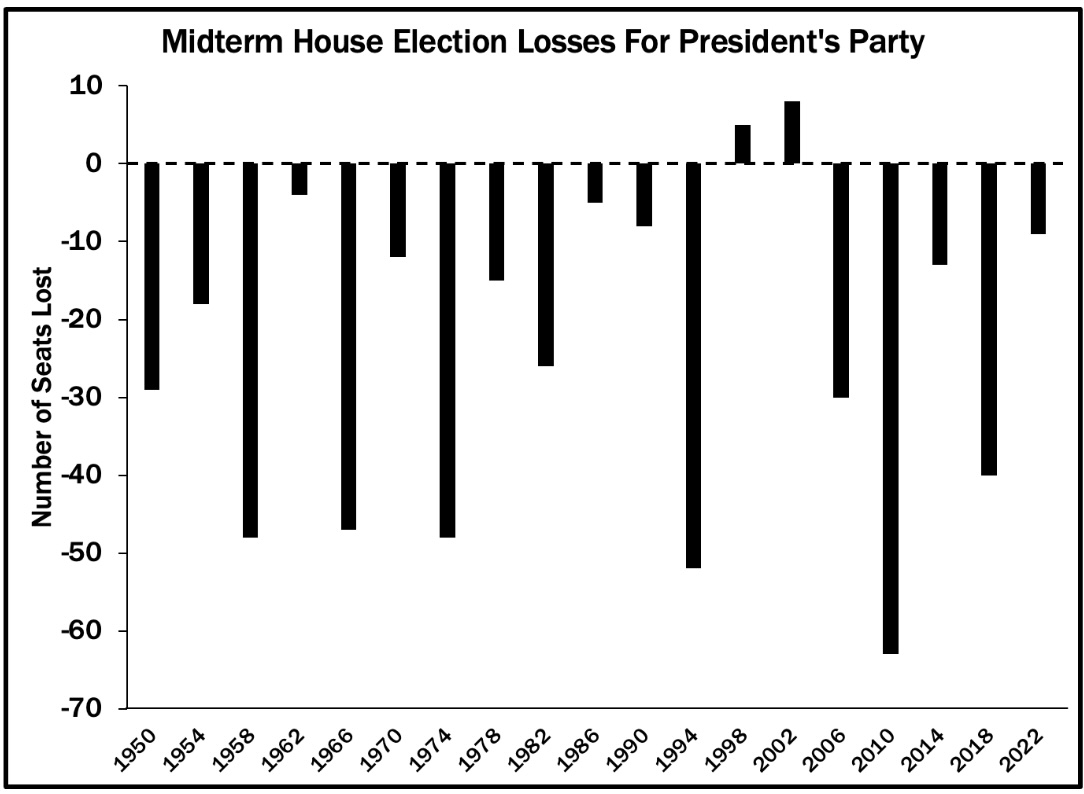
However, the figure shows that midterm election outcomes vary widely, from the 8 seats Republicans gained in 2002 to the 63-seat loss for Democrats in 2010. Put another way, except to confirm that the President’s party usually loses House seats, historical results do not tell us much about what to expect in 2026.
What are current predictions for the 2026 midterms?
One of the best ways to predict midterm election outcomes is to analyze them district-by-district or state-by-state, breaking them into groups based on the likelihood that a Republican or a Democrat will win the seat in 2026. The figure below shows the results of such an analysis by the nonpartisan Cook Political Group. (The analysis was published in March 2026, and will be updated multiple times during the campaign.)
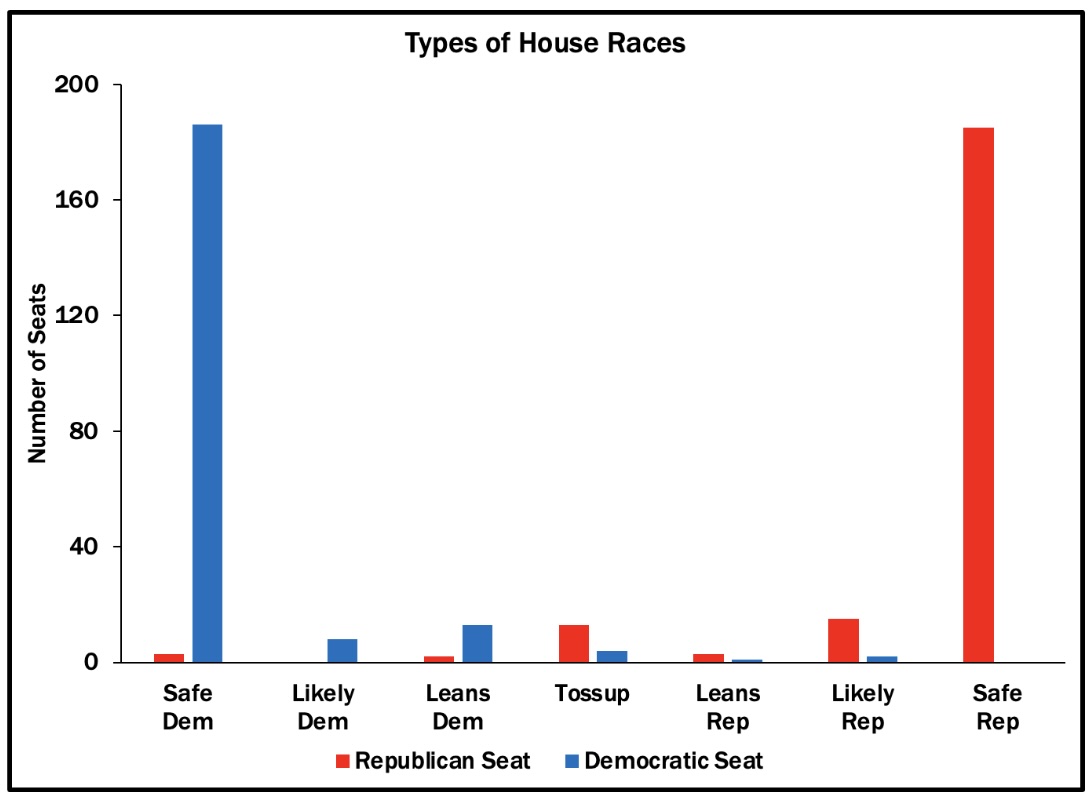
The Cook Report divides House seats into 7 categories: Safe Democrat, Likely Democrat, Leaning Democrat, Toss-up, Leaning Republican, Likely Republican, and Safe Republican. The table shows the number of seats of each type currently held by House Democrats and Republicans. For example, the Cook Report lists 17 seats rated as toss-ups, 14 Republican, and 3 Democratic.
Based on outcomes in previous elections, Everything Policy analysts calculated the average probability that a party wins each type of seat, as shown below.
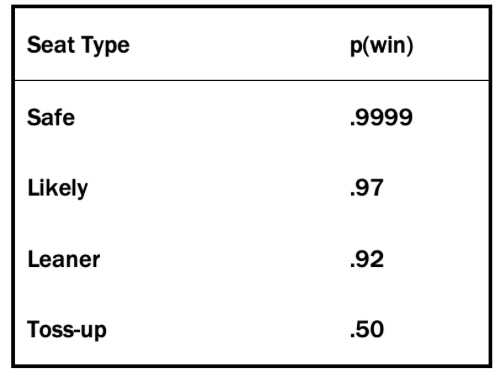
The first conclusion we can draw is that, given current conditions, the 2026 elections are unlikely to produce extreme seat shifts. The vast majority of House seats are Safe Republican or Safe Democratic, where party control is unlikely to change, with only a few toss-up seats, where the two parties have roughly the same chance of winning.
Using these probabilities and the Cook ratings, the figure below shows Everything Policy’s findings (“Bottom-Up”) about the expected outcome of the 2026 election. The range we calculated accounts for the Cook ratings and the uncertainties observed in previous elections. The figure also shows the NRCC and DCCC predictions, along with the range of historical outcomes. The dotted red line indicates the Republican seat loss (-3 seats) needed to flip the House majority to the Democrats.
What About The Senate?
Current Cook ratings of the 35 Senate races in 2026 reveal an even closer race, with either party potentially gaining one or two seats.
The Takeaway
Contrary to media coverage, a seat-by-seat analysis shows that under current conditions, the 2026 election is likely to be very close, with Democrats expected to gain about 10 seats. However, this analysis also shows that Republicans have a slim chance of maintaining their House majority.
These predictions are very tentative. The 2026 election is still in play. The Cook organization and other groups will issue updated race ratings throughout the 2026 campaign. These new ratings may show increased gains for Democratic candidates. However, it is also possible that the number of safe, likely, and leaning Republican seats will increase, making it more likely that Republicans will lose fewer seats or even gain several seats, bringing their total above their current level.


.png)