Who was Adam Smith?
Adam Smith was a moral philosopher and political economist writing in the mid-to-late 18th century. His two most famous works were The Theory of Moral Sentiments, published in 1759, and An Inquiry into the Causes and Consequences of the Wealth of Nations, released in 1776.
Smith was a key intellectual figure in the Scottish Enlightenment. Like the broader Western Enlightenment, the Scottish Enlightenment emphasized intellectual and scientific progress. Enlightenment thinkers valued rational thinking and empirical evidence, rejecting authorities and traditions that could not be justified by reason.
Existing European governing systems largely revolved around hereditary monarchies and religious principles. To defenders of these systems, they represented natural order, the way things always have been and always ought to be. To Smith and others, such arrangements were neither natural nor self-evident. Rather, they were the result of historical circumstances that could (and often should) be challenged based on reasoned thought.
What were Smith’s most consequential ideas?
Smith’s two most famous works directly reflected this Enlightenment viewpoint. In The Theory of Moral Sentiments, Smith sought to explain how individuals and societies developed conceptions of morality.
Just as defenders of hereditary monarchy treated the political order as self-evident, many earlier moral philosophers believed humans possess an innate “moral sense”, a built-in ability (like hearing or sight) to perceive right and wrong. Smith did not deny that such a moral sense existed but rather argued that it had to be explained.
Smith’s explanation focused on the social nature of morality. Individuals, he argued, gradually develop a sense of morality through their interactions with other people. Smith introduced the concept of “mutual sentiment of sympathies”, or the idea that people learn right and wrong by watching how other people react to them. Humans crave positive reactions from others, and over time, they develop an internalized “impartial observer”, an inner voice that judges their actions and guides their behavior. In this way, moral conscience is developed through social interactions.
Smith’s second work, The Wealth of Nations, applied Enlightenment principles to the economic sphere. He challenged the dominant policy of the era, the mercantilist system, which revolved around hoarding national wealth. This zero-sum worldview suggested that one country could only get richer by making another country poorer, leading to restricted trade, tariffs on foreign goods, and monopolies for favored companies.
Smith argued that such policies made a country poorer because they conflated money (a mere medium of exchange) with real wealth (the goods a society can consume). He argued that self-interested economic activity could benefit all parties involved.
For Smith, self-interest is a good thing. He said, for example, that a butcher does not sell meat out of the kindness of his heart but because it’s in their self-interest to do so. And yet, both the butcher and the patron are made better off: the butcher receives payment they can use for other goods, while the patron receives meat to eat.
Smith argued that, at the societal level, millions of people pursuing their own gain ultimately increase the nation's overall wealth and productivity, even though no single person is trying to produce that outcome. He called this mechanism the “invisible hand”, the idea that individuals in a free market are moved by the forces of supply and demand (the invisible hand) and produce more unintended positive consequences than those guided by the heavy-handed mercantilist policies of the state.
Free competition was central to Smith’s economic theory. When actors compete in a free marketplace, without government interference, the invisible hand guides them to the most efficient use of their labor. At the national level, certain countries can produce goods more efficiently than others. Under conditions of free trade rather than mercantilism, countries will import goods they cannot produce cheaply while specializing in areas where they have a competitive advantage. An unimpeded system of imports and exports, Smith argued, would make both trading partners wealthier.
How have Smith’s ideas been viewed since he published them?
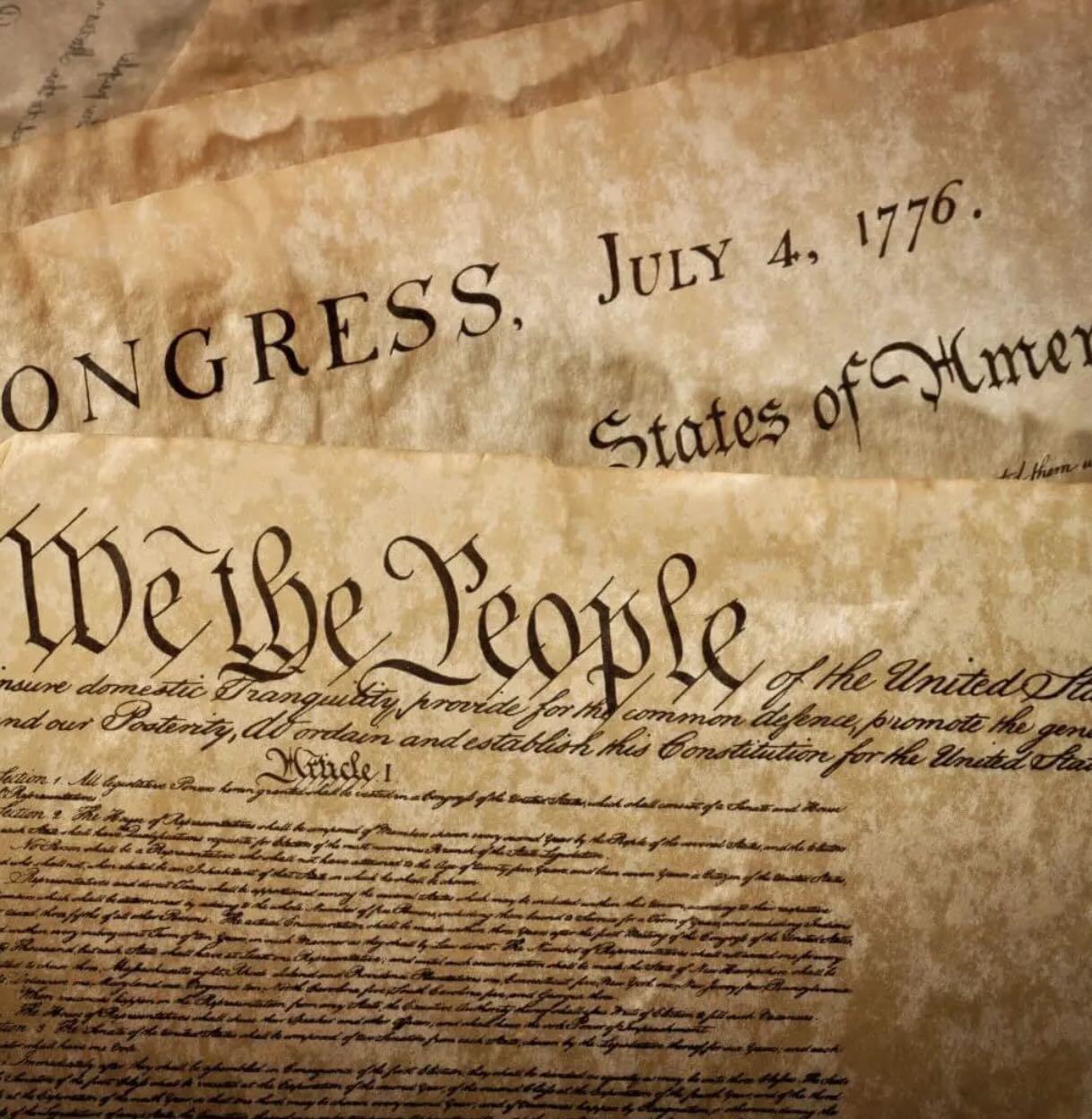
Many of America’s Founders read Smith’s work, and they were influenced by some of the same Enlightenment principles – ideals of individual liberty, progress, and constitutional government. And much like Smith, many of the Founders valued open commerce over mercantilist trade restrictions.
Smith’s more direct legacy has been in the field of economics. His work in The Wealth of Nations formed the foundation for modern free-market capitalism. Free-market thinkers have used his framework to argue that markets, left mostly alone, allocate resources and generate wealth more effectively than top-down government management. The concept of “laissez-faire” (or “let it be”) capitalism – which argues for zero government intervention in the market – grew out of Smith’s early ideas.
However, some scholars have argued that equating Smith’s ideas with laissez-faire capitalism downplays his moral philosophy and his explicit support for government functions. In The Wealth of Nations, Smith did not argue against government entirely, but rather against government policies that grant special protections and privileges to businesses. Indeed, he wrote that the government should provide public services – like public education, a justice system, and public infrastructure to support commerce – that “support the whole of society.”
Other economic theorists, especially those in the Marxist tradition, borrowed some of Smith’s ideas about labor but directly challenged his view that self-interested behavior automatically produces social benefit. For these writers, Smith ignores the class conflict built into the capitalist system. Markets left to their own devices, they argue, will generate inequality and exploitation rather than mutual benefit.
The Takeaway
Adam Smith was an incredibly impactful writer who developed theories of morality and economics.
His most influential ideas, outlined in The Wealth of Nations, defended free markets over protectionist policies and introduced the concept of the “invisible hand.”
These ideas continue to be discussed and debated to this day.























.png)











.png)